How to Be So Damn Persuasive You Become Impossible to Ignore (Sell Anything With This Framework)
It doesn’t matter what niche you are in; persuasion is the most important skill.
If you can’t get people to pay attention and take action, you will always be stuck on the bottom floor. Shouting loud but not being heard. Building offers that don’t get bought.
That shit sucks.
I know because I’ve been there.
It took me 13 months to get my first 1,000 followers, and 18 months to make my first dollar online. That wasn’t for lack of desire. I wanted my own business badly: I wanted to work where I want, when I want, on what I want.
But everything I tried would flop. Content I was proud of would disappear into the void. Offers I thought were good never got noticed. I used to shake my fist at the algorithm. But truth be told, I just sucked at positioning myself persuasively (especially through the written word).
But then I started taking it seriously.
I launched a product that made $5,000 in April 2022.
Then, over the next 12 months, I made my first 6 figures.
Three years later, I had made my first 7 figures. Including five 6-figure launches (I once made $141,000 in 4 days). 280,000 people now read my content. And I get to travel the world, write full-time, and build shit to help people win.
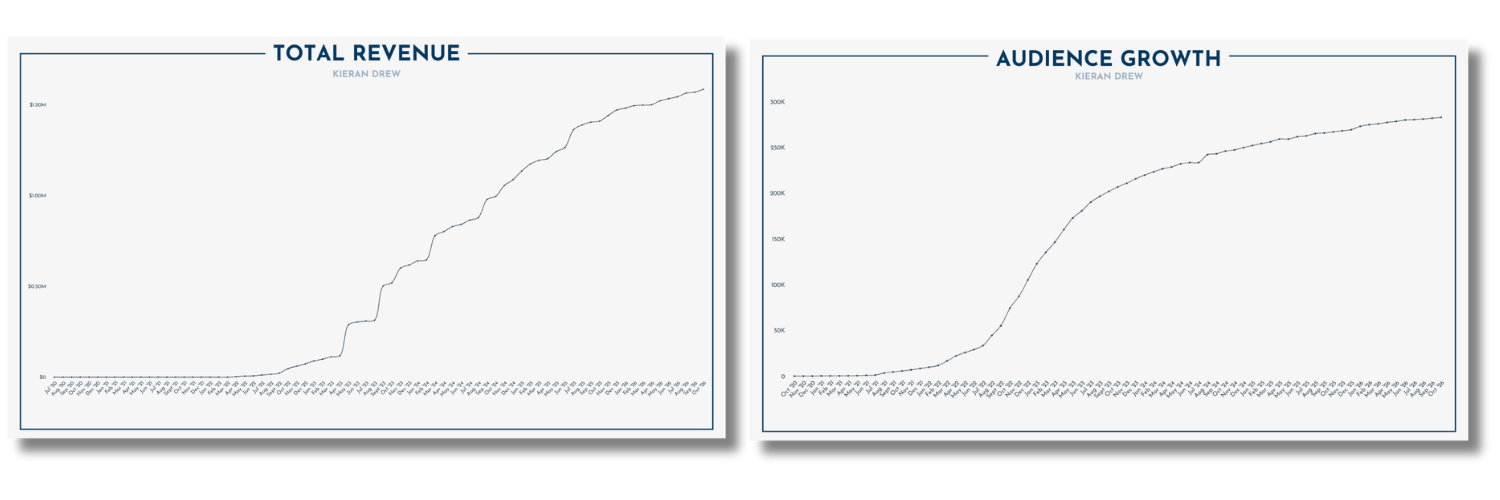
Persuasion is the key to getting what you want.
And in this article, I will show you how to be so damn persuasive you are impossible to ignore.
The Persuasive Promise Framework
Persuasion is simple:
It is about giving people what they want.
You must understand that people want to buy shit, but they are sick of being sold. There is so much crap online that scepticism is sky-high. If you don’t make a persuasive promise, then you don’t surpass the bar of scepticism, which means there’s no action.
There are six ways you can make your promises more persuasive:
- Success. Will this help me get what I want?
- Speed. How fast will it help me get what I want?
- Simplicity. How easy will it be for me to get it?
- Special. What makes this different to what I've heard before?
- Safety. How do I know it will work?
- Steal. Is it a good deal?
I'm also going to give you one bonus point on persuasion, which comes from master copywriter Gary Halbert. It will change your life if you pay attention because I guarantee 90% of your competition are overlooking it.
Grab a cup of tea, let’s dive in.
Success: The Number One Rule of Persuasion
If you want to be more persuasive, then stick this rule on your fridge:
Always, ALWAYS, appeal to self-interest.
This sounds obvious, but I can't tell you how many pitches I see online where the writer has forgotten that their offer is not about them. It is about their reader. They yap on about features but forget that people don’t really give a f**k about you or your product. They care about what it will do for them.
This is the difference between trying to sell features versus benefits.
Amateurs yap on about the former. You set yourself apart by focusing on the latter.
Think about what you are promising people.
Then go deeper with “which means?” until you uncover the deeper benefit.
“They lose 10 pounds”
Which means?
“They fit in their wedding dress”
Which means?
“They feel confident walking down the aisle”
Which means?
“They remember this day fondly for the rest of their life.”
And considering how priceless memories are, suddenly your expensive offer doesn't sound so expensive.
Status is so important that I want to make a point here.
We have two driving forces behind our behaviour:
- Avoid pain
- Achieve pleasure
And so when you are making a promise, you want to focus on:
- Solving a bleeding neck problem (something that is both painful and urgent)
- Achieving a desired transformation (what life is like after working with you)
If your offer ain’t solving something serious, it is nice to have. Which is code for never to be bought.
For example, I get pitched endlessly in the DMs.
People keep wanting to get me more clients and make me more money. Which is nice; I like having money, but if they took 10 minutes to read my content, they would know that my main motivation is WRITING and FREEDOM.
So when they offer to fill my calendar full of calls, I ain’t interested.
But last month I spent $65,000 on two purchases.
On what?
First, a high-quality DFY self-publishing deal for my book.
Second, a DFY YouTube agency.
Both help me achieve my desired result of writing and marketing the best book I can, while solving my bleeding neck problem of time and traffic.
Simple.
Remember:
Everyone is telling themselves a story. Your job as a writer is to make the reader the hero of theirs.
But promising a result is pointless if you can’t do it within a timeframe.
Speed: Never Sell Slow
Another rule of human nature: we are all cripplingly aware of the finite nature of time.
…Even if we don’t think about it.
Everywhere you look, especially in the Western world, there is urgency. Everyone wants to be richer, sexier, more free RIGHT NOW.
Not later.
And yet so many people try to persuade by making a promise of a distant future. That shit is dumb; it does not work. It should, but our monkey minds just cannot comprehend why a decision right now will benefit us in three years.
If you want to persuade, you need to get people results fast.
The faster, the more people are willing to pay.
Of course, this does not mean you make ridiculous claims like helping people get stinking rich in the next 30 days. Stupid promises attract stupid people, which guarantees your business is gonna suck.
But you need to be thinking about speed in everything.
- What is the immediate result you can give?
- What is the near-future benefit of working with you?
- What is the timeframe of the promise?
And if you wanna be very persuasive, TIE IT INTO TIMELY EVENTS.
For example:
If you sell a fitness offer, don’t just say you’re gonna get them shredded.
The immediate win is dropping 5 pounds in the first 28 days.
The benefit is being in great shape by the start of summer, which is just around the corner.
And you are confident you can transform their body within 120 days, or you’ll give them their money back (we’ll speak about guarantees in a moment).
How much better does that sound?
And we’re just getting started.
Aside from spending money to get a result faster, there is one other aspect that can get people whipping out their wallets.
And that’s the result without the work.
Simplicity: Don’t Make it Hard
There is nothing dumber than trying to sell something really expensive that sounds like a tonne of work.
People pay for ease, not effort.
The simpler it is to get what your reader wants, the more they will be willing to invest. This is why you can increase the value of your product dramatically simply by adjusting the level of access and support.
You can charge:
- $20 for a book
- $200 for a course
- $2,000 for a membership
- $20,000 for a done-for-you version
The information is the same, but the level of support increases.
Whatever you offer, you need SIMPLICITY throughout. This means frameworks and high-quality supporting assets.
For example, I just finished writing my book Magnetic Writing. It’s the best book you’ll find on how to grow your business by writing online. I’ve spent probably 2,000 hours compressing everything I know into 70,000 words. Then, there’s a workbook that goes deeper, with full AI support to implement the advice.
It’s still a lot of work because it is a book (DIY)…
But I know I will have no problem selling it because I can point to my simple frameworks to get your desired result faster and easier than if you tried to do it yourself.
See how the persuasive elements are beginning to stack?
(You can download a free chapter called the Five Pillars of Magnetic Writing by clicking here).
Speaking of frameworks, this leads us to the next persuasive element you can play with.
Special: Don’t be better. Be different.
Unless you're selling teleportation devices to aliens who have just landed on Earth, chances are you, my friend, are in a saturated, sophisticated market.
It is critical you understand what this means. I highly recommend you dive into Breakthrough Advertising by Eugene Schwartz, but I'll summarise it in two sentences for you right now. The busier your market is, and the more offers they have seen, the more important being DIFFERENT from the crowd becomes.
Understand:
97% of your audience have tried to get the result they want before. They failed, which means they no longer believe whatever promise they were made before.
Your job is not to make them feel bad for their failure.
Your job is to show them why they were ALMOST there, and your offer is what was missing.
How do we do this?
By building a unique mechanism.
This is a stand-out aspect of your offer. It can be one of three things:
- The promise
- The process
- The problem
Here are some real-world examples:
- P90X helps people get fit. But they do it by causing "muscle confusion" (mechanism = the process)
- Listerine is a mouthwash. Their marketing department owned the term Halitosis (mechanism = the problem)
- FedEx delivers parcels. But they delivered it overnight (mechanism = the promise)
Positioning is the creative work behind offer-building, and creativity requires experimentation. List potential differentiators for your offer and test them through content and conversations.
For example, when I built my course Productize Your Knowledge, I created the Premium Product Pathway as my unique mechanism (process). It was an OK start. But I sent an email about "Validate Before You Create" and it was a smash hit. So I shifted my marketing.
My promise became: I can help you build a product that is guaranteed not to fail (mechanism = the promise)
As you deliver, your clients will tell you what they love. Then you can package your solution around this. Now you have an offer that is difficult to compete with because it is built on your natural strengths.
But the problem with increasing the persuasive elements of a promise is that the bigger the claim, the higher the chance they don't believe you.
Let me tell you a quick story about a lesson I learned from one of the world's best copywriters.
Safety
Quick story for this one.
I became friends with David Deutsch, one of the greatest copywriters alive, responsible for over a billion dollars in sales, and he kindly offered to critique one of my sales pages. I'm a student of copywriting. He tore me apart for about three hours.
It was very humbling.
My favourite lesson was about claims and proof.
As he was reading, he kept saying:
There’s the claim, where’s the proof?
Every time you make a claim, you must follow it up with proof. Because when you say something, the next question in your reader's mind is: why should I believe you?
An unsupported claim raises scepticism.
If scepticism gets too high, the sale doesn't happen.
This matters because your brand, writing, and business are one big claim. Every day, you are fighting for people's attention, and without proof, it all falls apart.
There are three levels of proof:
- Authority by association. Using someone else's ideas (or name) to support your own.
- Your results. "I got this result, so listen to me."
- Your client results. The most persuasive of all. Nothing is more persuasive than seeing someone like you get results from following the advice.
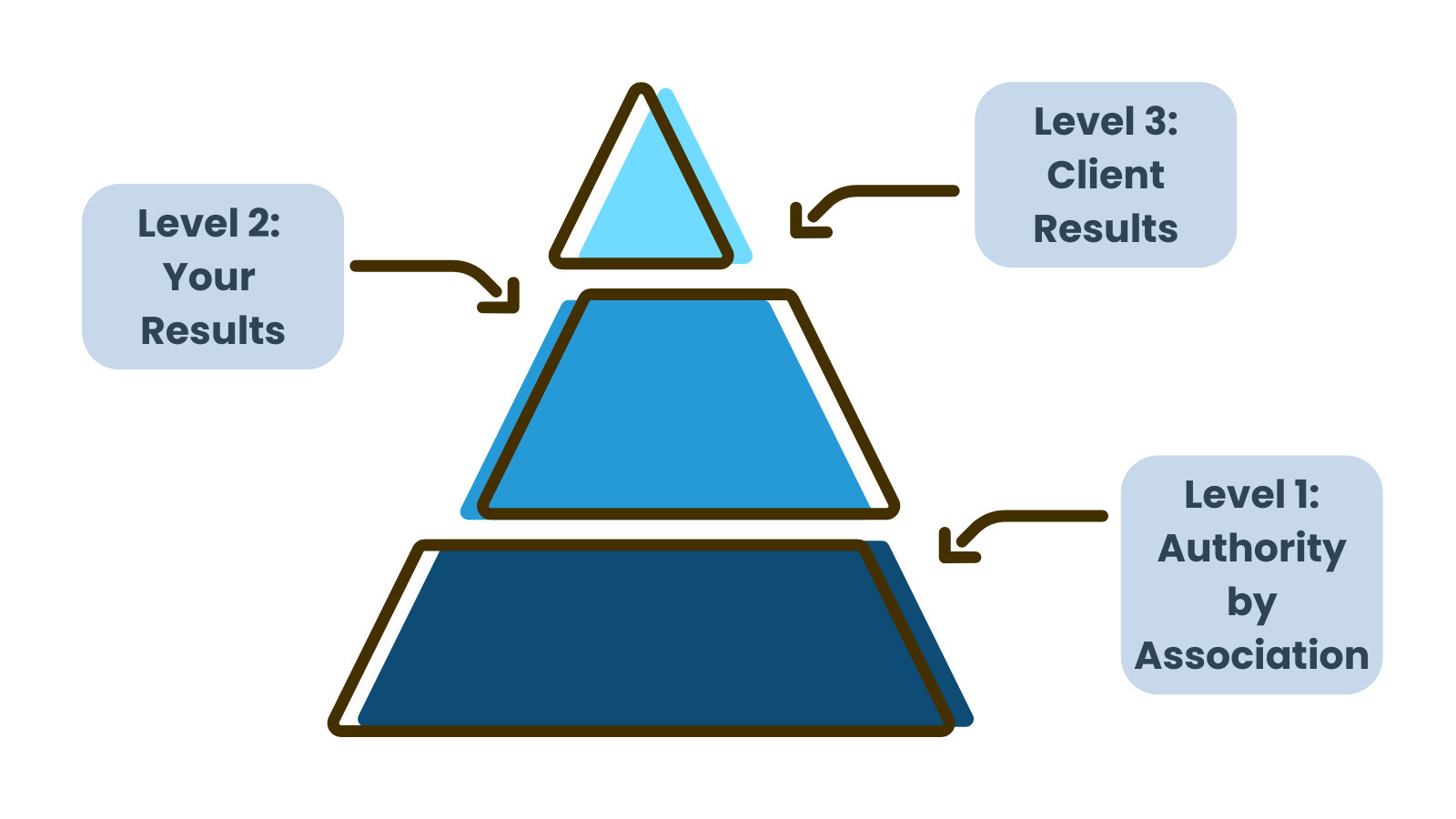
Now you might freak out and think, "Well, I don't have any results," but the good news is you now know your next objective, and that is to go and get some. But you can begin to build trust using the authority by association technique right now.
Think about how I started this point. You are reading more closely because I used David Deutsch to present the idea.
But back to your pitch.
Really, your top priority is to get a case study.
Because one good case study can change the trajectory of your business.
This is why I laugh when I see a beginner entrepreneur trying to charge a five-figure payday without any evidence that they can get a result.
The start of the business is a different game.
The purpose is not money, but momentum.
For example, I launched my first high-ticket offer two years after my first attempt at online business. My first client was $500 for ten hours of calls and unlimited asynchronous support over two months.
I could've made more flipping burgers, but I didn't care. I had one objective: make this the best $500 he ever spent.
To this day, he agrees. He escaped his corporate sales job, built a multi-six-figure business around his passion, and is now travelling the world.
I used his case study to attract more clients. Which led to more proof, which led to more clients and allowed me to charge higher prices.
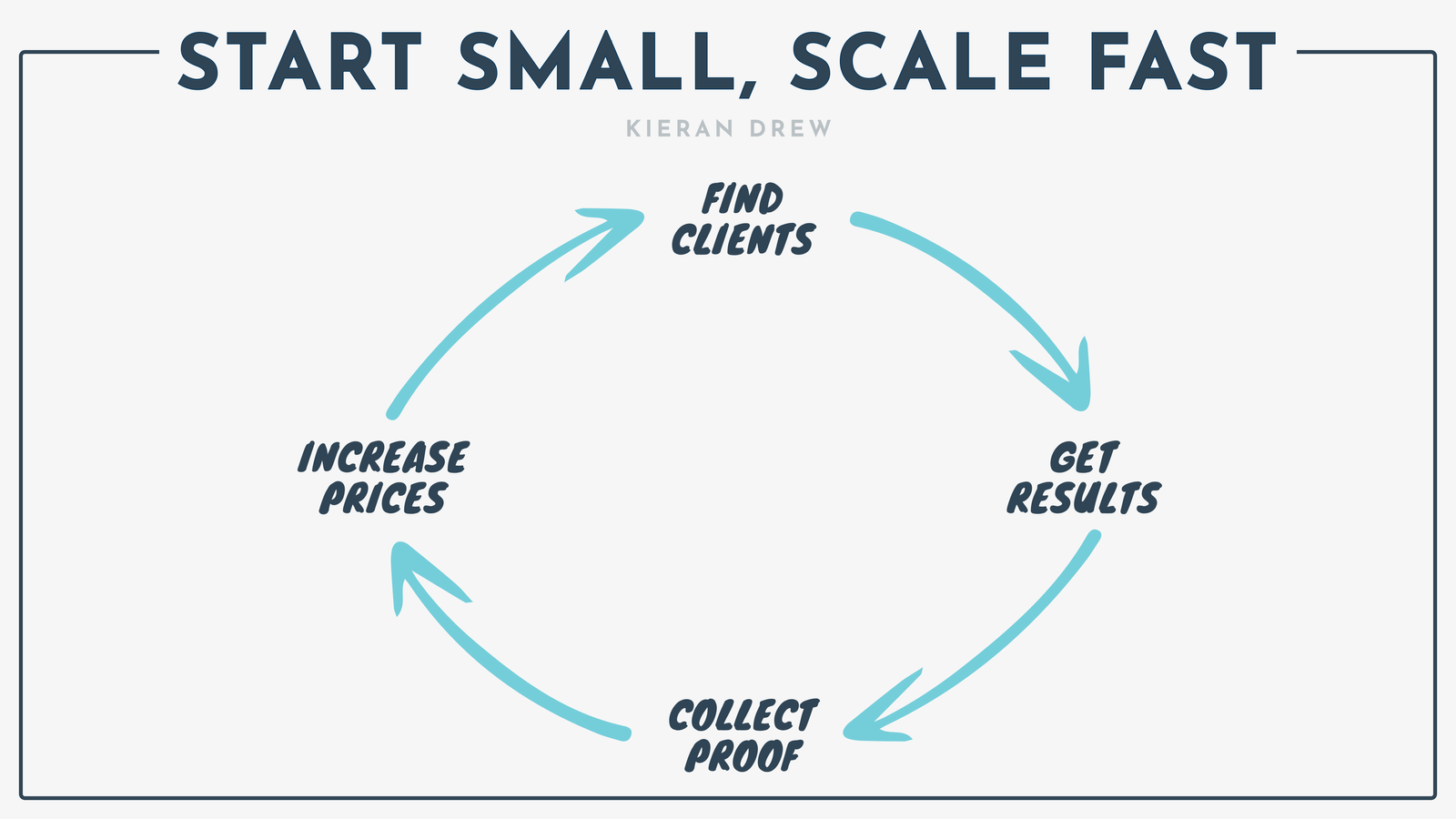
Proof is one element of persuasion you really cannot overdo. You want to collect it like a squirrel collects nuts: not just case studies, but every single compliment, win, and drop of momentum.
Reputation is a game of perception. Proof is how you win.
Now, let’s look at the final persuasive element in the 6-part promise. Then we’ll wrap up with Gary Halbert’s best tip.
Steal: Everyone loves a bargain
A bargain does not mean cheap.
It means relative value.
A Rolex isn't cheap, but to somebody it's a good investment because it gives them the status and respect they think they deserve. If they are taken more seriously, then it’s worth the dollar.
You need to show why your offer is a steal.
And that does not necessarily mean financially. People get confused online and think you can only sell "how to make money".
Yes, the best way to make money is to get close to the money.
But TIME is the most finite resource, not money. Anybody with an iota of intelligence knows their time is their most important asset.
So show people what you will save them when they invest with you.
There's a famous story attributed to Picasso. At a cafe, a lady asked him to draw her something. He did a quick sketch on a napkin, then asked for a ridiculously high price. She said, "But this only took you thirty seconds." He replied, "It took me forty years."
You are not charging for your time.
You are charging for the years you have spent earning your expertise. Through this framing, you can highlight the cost of doing nothing (or using less effective solutions).
For example:
You can spend three years figuring out how to build a business by writing online. Or, you can spend $30, and I will give you the entire blueprint. And considering I charge $20,000 to help implement all of this 1-on-1, it’s a no-brainer.
Sounds like a pretty good steal, right?
But NONE of this matters if you don’t get this final bonus point right.
Gary Halbert’s Secret to Persuasion
I've included this tip in the essay because I am so guilty of screwing it up.
It is an important lesson about demand.
You cannot sell ANYTHING to someone who does not want it!
Sounds obvious, but you see it all the time. Consider the dating world. I see so many dudes trying to chase an uninterested girl. What a waste of energy. You just end up prancing around like a performing monkey and then getting bitter when it doesn’t go well.
Your job is not to create demand.
It is to CHANNEL it.
Gary Halbert would ask seminar rooms: if you and I both opened a hamburger stand, what advantage would you want?
People would say a better location. Better beef. Lower prices.
Halbert said he'd take one thing over all of them:
A STARVING CROWD.
Give him a crowd of hungry people, and he'd outsell everyone, even with a worse product and a worse pitch.
And so please, for the love of god, build your business around bleeding necks.
Speak to your audience.
Find what keeps them up at night.
Build shit to help them win.
Use the persuasive elements in this essay to get people to pay attention and take action.
And enjoy making an impact (and income) with your ideas.
To your freedom,
Kieran
P.S.
If you want to grow your brand and business by writing online, you'd love my upcoming book, Magnetic Writing. It's available in early 2027, but you can get access to a free chapter right now. It's called the Five Pillars of Magnetic Writing. I will show you the ideas that are most persuasive to share, to stand out from the crowd.
You can grab it at the link below, and you'll receive more bonus material before anyone else.

About Kieran
Ex dentist, current writer, future Onlyfans star · Sharing what I learn about writing well, thinking clearly, and building an online business